

Why are America’s TikTok Intellectuals booing AI at their college graduations? I don’t remember booing AOL or punching Clippy when I was in school. Maybe it’s the spectrummy billionaires peddling AI job replacement for four years, instead of a tool to make memes with bonus fingers. As these brilliant boneheads backtrack, there’s mostly good news: the revolution will not be tokenized. Not yet. Here’s my five-year outlook for AI’s impact on jobs and why the revolution is not what it seems.


In 2023, I thought AI was like releasing billions of “workers” into our economy. This would create an inverse Baumol effect, driving down everyone’s wages. But the more I use it, the more I realize we unleashed billions of interns. Interns seem like they’ll make you more productive but require infinite patience, babysitting, and error-checking. One in seven is a star. The others are favors to your neighbor in Connecticut.
“In 2023, I thought AI was like releasing billions of “workers” into our economy…But the more I use it, the more I realize we unleashed billions of interns…One in seven is a star. The others are favors to your neighbor in Connecticut.”
Will this change? Up to a point. Here’s why.
AI Jobs Impact Shopping Spree
AI pioneer Andrej Karpathy’s AI-exposure project scored which US occupations are most replaceable by current LLMs. SHOCKER - jobs whose output “lives on a screen” scored highest. That’s about $3.7 trillion a year or 49 million workers - a third of annual wages. These are mostly non-executive office jobs (customer service, clerks, analysts, accountants, legal staff, marketers, programmers, etc.) Drivers aren’t far behind.
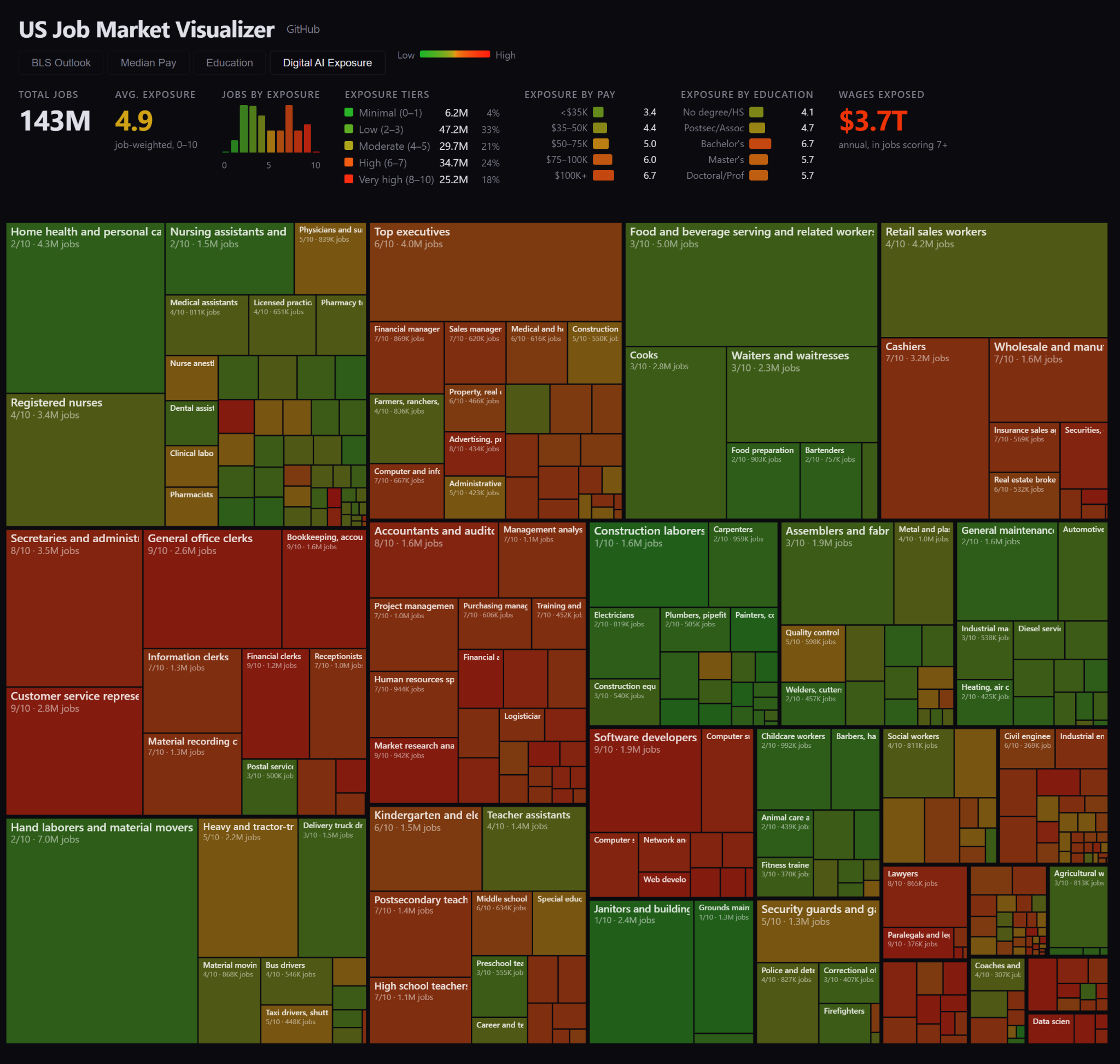
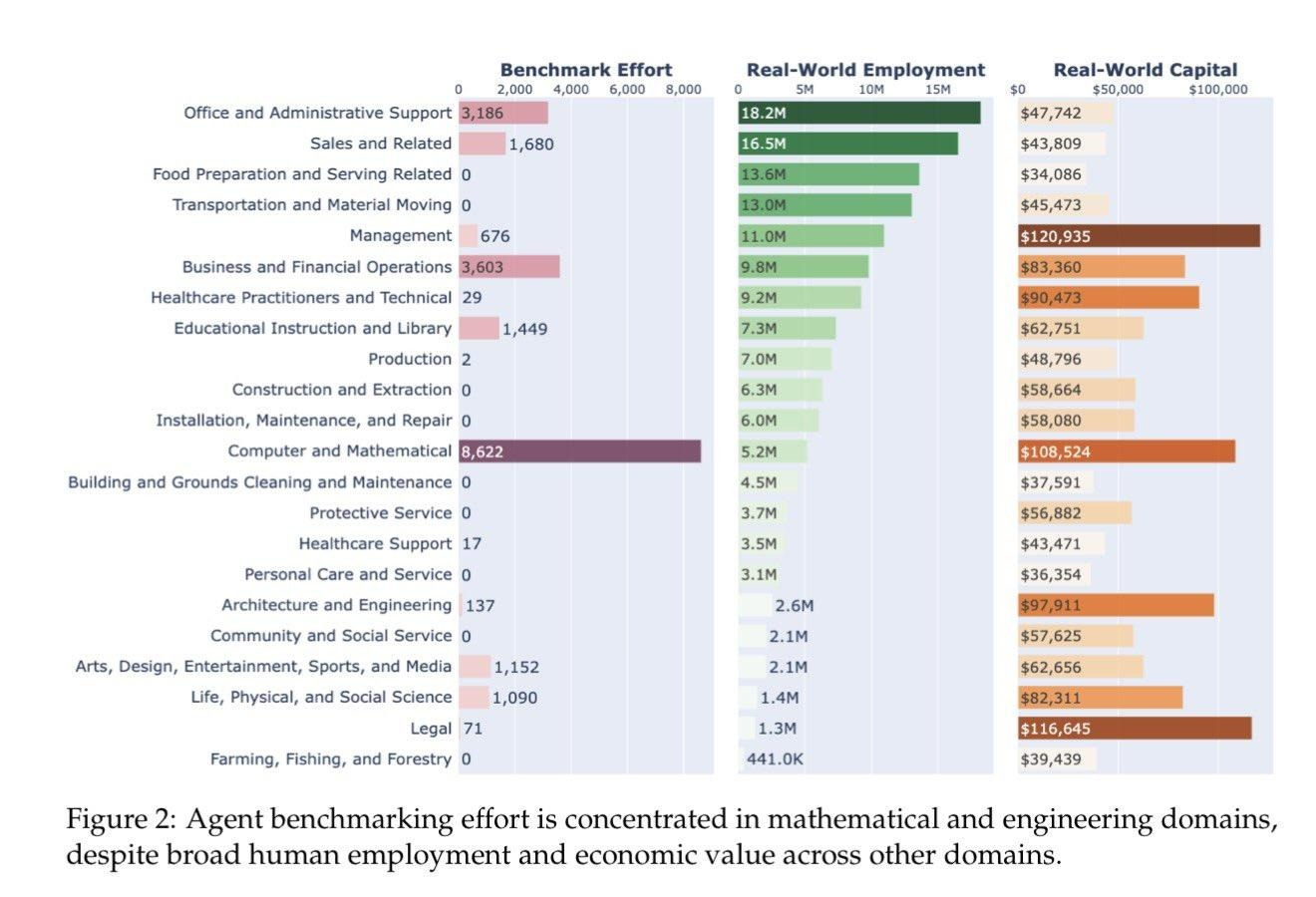
I prefer MIT’s more measured estimate of 11.7% workforce exposure and $1.2 trillion in wages. I might even drop down to this Carnegie Mellon study that concentrates AI agent impact in math and engineering, with only a few splatters into business, finance, admin, and sales.
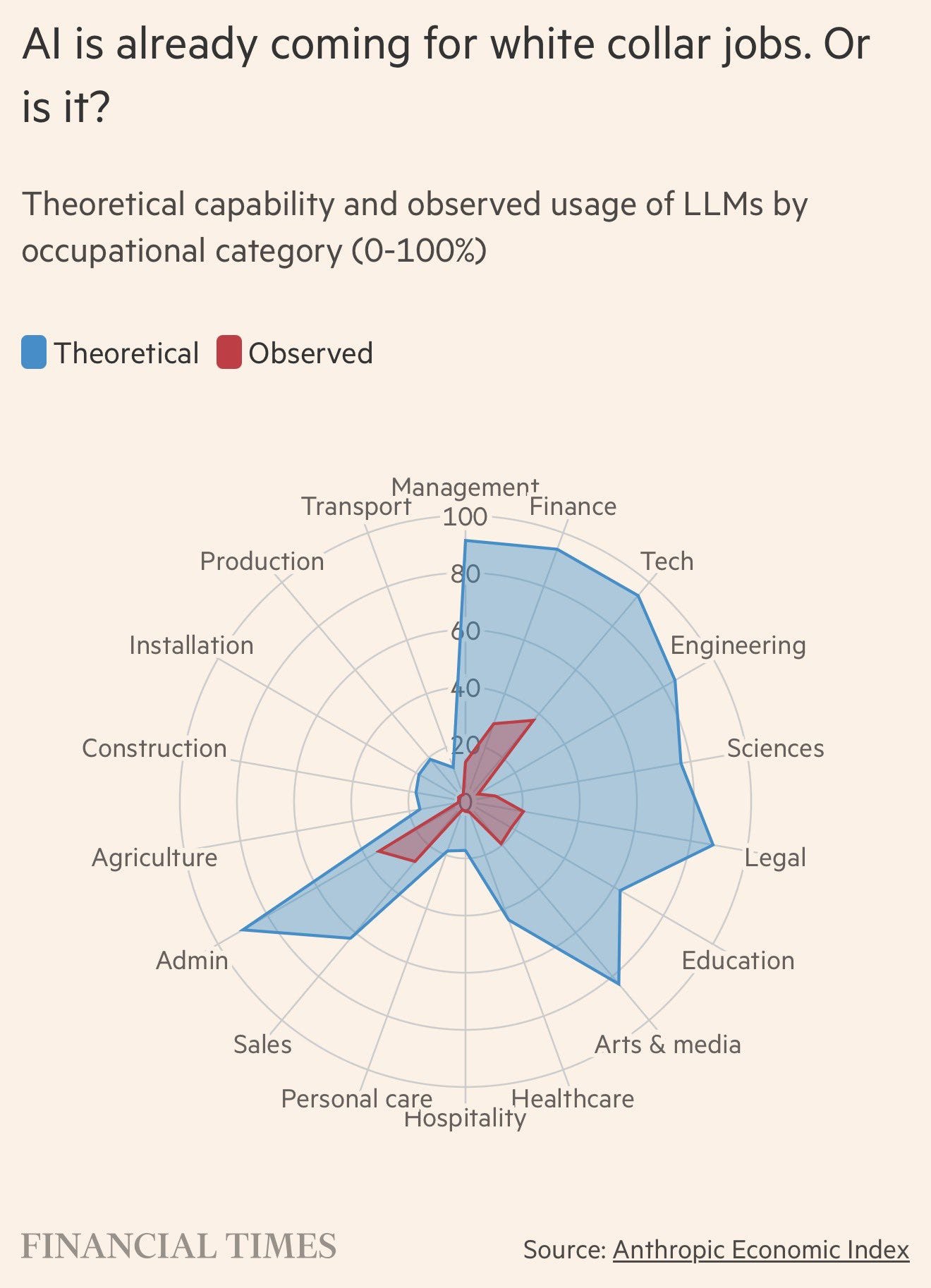
This chart from FT is even more encouraging for us meatsacks. Despite this theoretical risk, actual observed impact has been a tiny fraction of that, mostly because AI automates tasks, not whole jobs.
There’s no big uptick in college graduate unemployment, as many feared. We’ve also not seen mass layoffs, except for large tech companies which overhired during Covid and needed to offset expensive bets on AI. But the jobs themselves weren’t eliminated by AI, even when AI was the scapegoat. In fact, software developer employment was up 8.5% in 2025, according to Microsoft and they’re supposedly more productive than ever.
If I keep looking for new studies, Claude will call me looking for work. What I’m saying is STOP SHAKING FFS!! You’ll be fine, as long as you embrace...
The Humanity Amplifier
When used within its limits, AI can be a massive amplifier of potential and accelerant of human progress. Those who master it will create unprecedented wealth and productivity. They will deliver all the new (and unforeseeable) jobs that every transformative technology eventually does. Try explaining Futurist/Advisor/Substacker to your grandmother. Mine departed before I had to.
It’s not just entrepreneurs. Top coders, analysts, consultants, and other desk jockeys will create leaps in productivity. That means fewer jobs for Quiet Quitters, more for those who prompt till they must turn tricks for tokens.
AI will democratize software development either by ending the heartbreaking developer shortage H-1B sponsors claimed existed - or simply turning any non-techie into a vibe-coder. There are already techie-free startups like Plinq, TrenFeed and TrustMRR. I’m even advising one in the farming industry. Either way, rejoice! Soon, even your bodega will have an IT department.
Then there’s the “agentic” boom, set off by OpenClaw, which connected AI to various platforms and activities. It spawned promising experiments, like zero-human companies and “podcast employee in a box”, who’ll be a real boy someday. It also gave many hope that open source models can power a new generation of creators and entrepreneurs, free of corporate control. I’m not convinced.
In 2017’s Why Monopoly Is The Future…And We Love It I wrote, “Sweet, innocent open source options – like Firefox, OpenOffice and Linux – eventually get smothered by vicious tycoons dressed in harmless hoodies.” And wouldn’t you know, shortly after the OpenClaw flareup, the project’s creator was taken out of circulation, hired by OpenAI, and Anthropic abruptly restricted API access for OpenClaw users. This is the Big League, kids. Trillions are at stake.
Still, I think the cat is out of the bag. Many open source (or weaker “open weight”) Chinese models are being adapted for safe use here. Others will come. (Like I haven’t heard that a thousand times from Xi Jinpimp.) More affordable consumer hardware will handle lighter, more capable models. Entrepreneurs will use a mix of open and closed tech, the way solar-powered homes coexist with municipal grids and corporate utilities.
AI’s Sloppy Engine Room
There’s no escaping the messy storming stage of a transformative technology.
Let’s start with infrastructure. Countless GPUs (mostly Nvidia chips) sit uninstalled in huge warehouses. Data center projects have been stalled by politicians, scared citizens, perennial protestors, and NGOs (some funded by foreign adversaries). Beneath the panic, there are serious energy and mostly overblown water constraints.
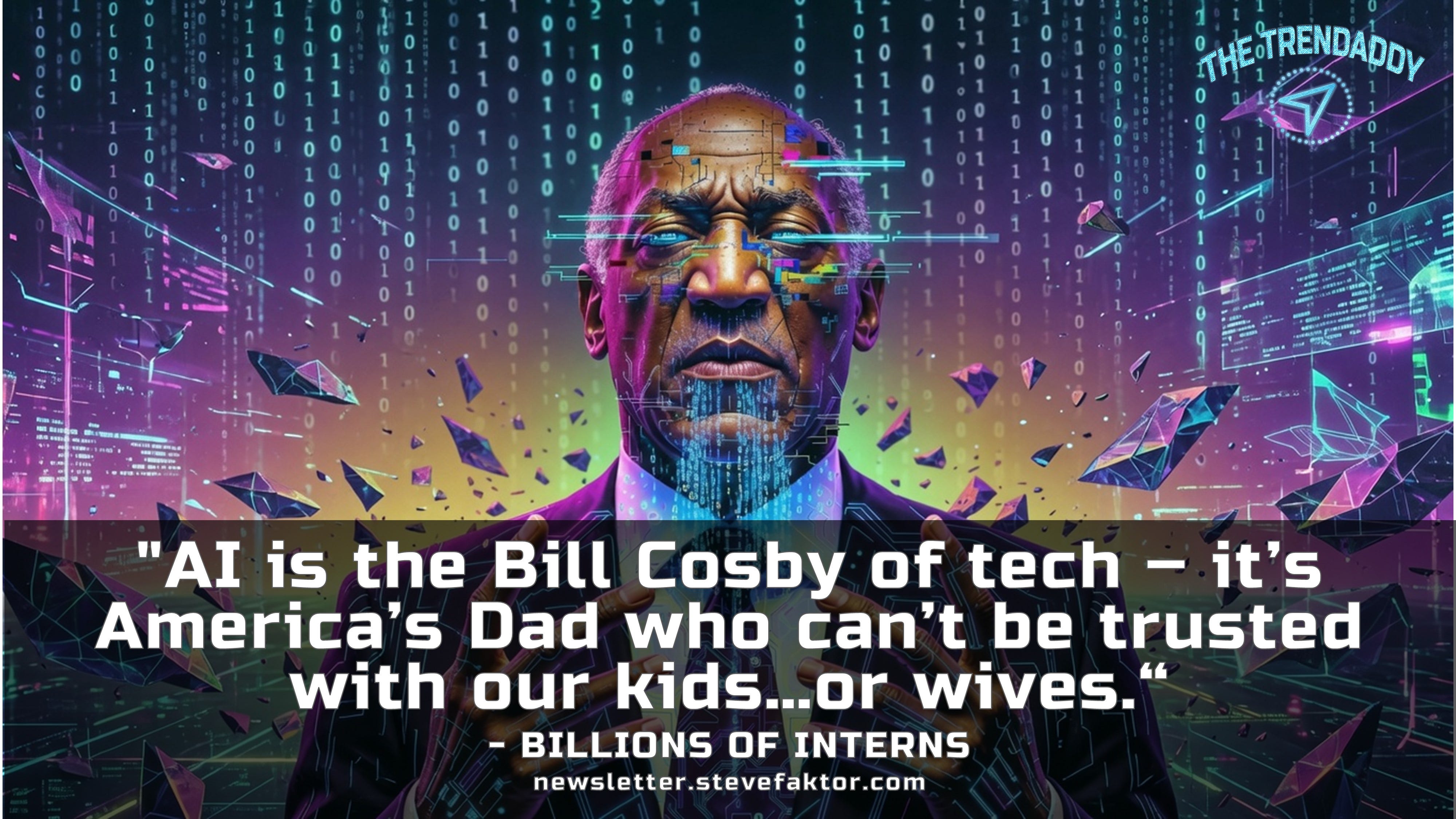
Then there’s the product itself. AI contains the sum of all human knowledge. It’s 37% of our economy and 92% of GDP growth. Yet it still concocts fake legal cases, third legs, phantom links, and medical misdiagnoses. AI is the Bill Cosby of tech - America’s Dad who can’t be trusted with our kids…or wives.
Even OpenClaw had its share of horror stories. For the foreseeable future, AI needs layers of human failsafes for high stakes jobs, like medicine, military, and photographing Alec Baldwin.
I won’t even get into the lack of legal or privacy frameworks. Much of that is now being decided in courts.
Structurally, what if LLMs aren’t like cars replacing horses, but just rhoided-up horses? There’s only so fast they can run, even with endless jabs of compute. LLMs are based on a small subset of human experience - words and images. That’s good enough for many uses, but far from human-level complexity or capacity. For that, it needs to be multisensory and self-determined. Entrepreneurs like Yann LeCun are building “world models”. Others aspire to artificial superintelligence. But their fruits are years away, to say nothing of their vegetables.
Even robots are years away. Outside of autonomous driving and cute dancing demos of future wartime executioners, AI is mostly impotent in the physical world. For now, physical labor is safe.
The biggest problem with AI remains its shaky business model. The massive capital expenditures (CapEx), have not generated ROI from new revenues or cost savings. Uber CEO Dara Khosrowshahi recently said the cost of AI is “hard to justify” because it’s not producing enough useful features. And circular deals among the largest players lead many to scream “BUBBLE!”.
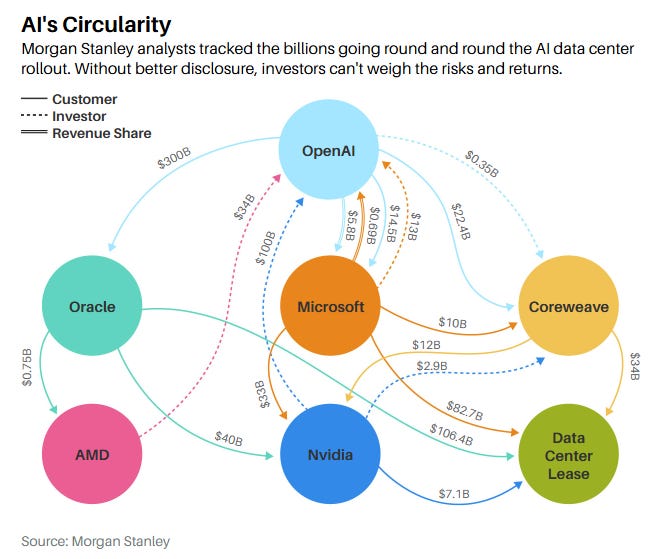
Everyone relying on this shaky ecosystem is building their battleship in the middle of the ocean, mid-war. There’s no better example than Microsoft. It owns 49% of OpenAI, sells its own AI tools, has near near-infinite server capacity, and billions to spend, yet it still had to slash its Claude AI budget when Anthropic switched to token-based billing, breaking Microsoft’s compute budget. Google just emailed paying Gemini subscribers (ME!) that token use will now be restricted. I could barely render the opening to The Trendaddy podcast as Gemini added insult to injury charging for its mistakes, ignoring explicit instructions until my tokens ran out. It’s infuriating.
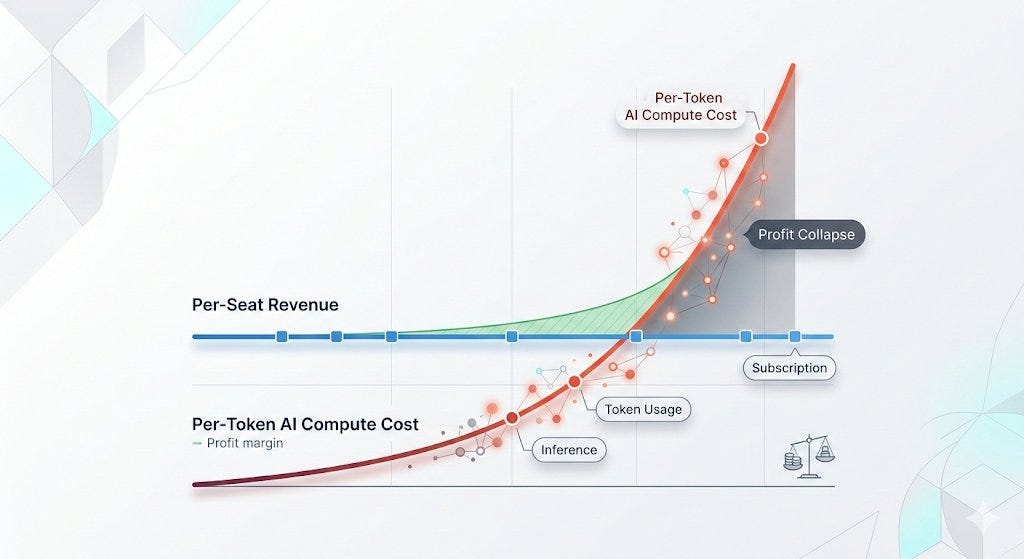
In fact, the entire AI industry is undergoing a stealthy recalibration, not unlike food producers in periods of inflation. Food companies don’t just raise prices, they substitute cheaper ingredients, shrink serving sizes, redesign packages, and reroute supply chains to cheaper producers. Similarly, AI companies are quietly capping tokens, sneaking in advertising, routing queries to cheap, dumb models (that Tyra Banks can’t frighten), and nudging users towards $200 monthly tiers to get any real utility. We outsourced nutrition to food conglomerates, only to be fed dyes and fillers. Now, we’ve outsourced thinking to digital Einsteins, only to be downgraded to digital Epsteins.
“we’ve outsourced thinking to digital Einsteins, only to be downgraded to digital Epsteins.”
AI providers tried to do what Uber, Amazon, and even China did - underprice, eat losses, then pull the rug once we’re all hooked. Problem is, compute cost is punishing and capacity is finite. Power users can quickly run up insane token costs that incinerate profitability and degrade service. If providers can’t keep subsidizing tokens and consumers can’t stomach the price volatility, this revolution might stall long before we’re all junkies.
Can something this unstable reliably steal jobs? Or even automate tasks? We won’t get an accurate view of AI’s true potential until the business model stabilizes. This is the case for any new platform. (See my classic Surviving Platform Risk) Until then, brace for…
Swans of Color
(Formerly, “Black Swans”, but more inclusive according to my Chief Vocabulary Officer. Who am I to doubt zir?)
With any new technology this powerful and lucrative, expect the unexpected.
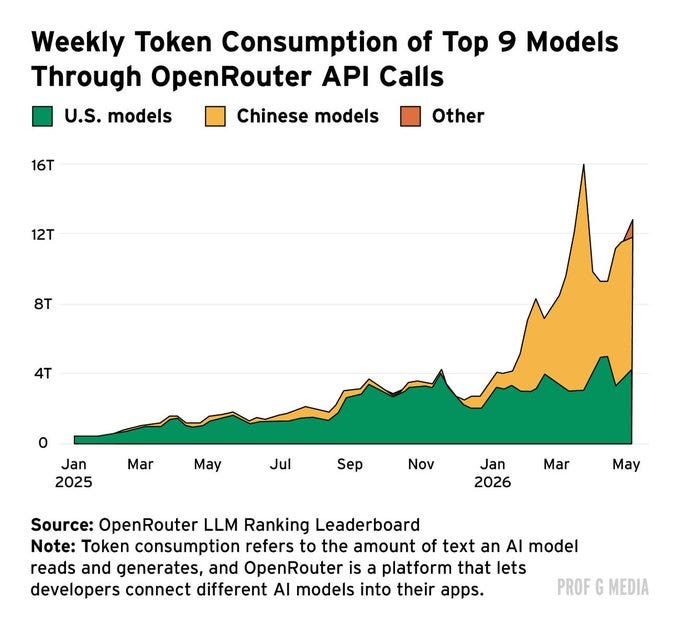
As I wrote this, China announced a permanent 75% price cut on its Deepseek model. According to one analysis, DeepSeek is now 11.5x cheaper than GPT-5.5 on input and 34.5x output. It’s 28.7x cheaper than Claude Opus and 17.2x cheaper than Sonnet on output.
Similarly, Alibaba’s latest Qwen3.7-Max just got faster and cheaper.
On the hardware side, Huawei just announced a workaround that will allow it to make chips that compete with Intel and top global competitors by 2031. They better. Or the beatings will resume.
By undercutting American AI models, China is making a serious play for American minds and corporate secrets. These are logical extensions of what they achieved with TikTok and IP theft via outsourced manufacturing. At some point, US CEOs will be pressured to trade security for solvency. We’re inching in that direction:
China is not the only force that can change the trajectory of progress. Energy capacity, data center panic, Luddite leaders, catastrophic errors, consolidation into powerful monopolies, new breakthroughs and uses, are among the many black swans circling AI.
AI Ozempic
“In 50 years, staring at laptops all day will seem as bizarre as driving to a strip mall to rent a movie.” - The McFuture Manifesto
Looks like we did 50 years in 10, just like Ross Ulbrecht. It’s hard to imagine making PowerPoints and feeling indispensable. Some did. After all, our identities and livelihoods depended on it. Every once in a while, a pointless meeting or a mass layoff, would pierce that veil. When Elon fired 60% of Twitter and it ran better, even the mighty tech industry realized how much fat it carried. Others are even fatter.
“AI is tech Ozempic. It will slim companies down, while obscuring the underlying problems that made them fat in the first place.”
AI is tech Ozempic. It will slim companies down, while obscuring the underlying problems that made them fat in the first place. AI is a loophole around complexity. We have a 5-million line tax code, onerous legal system, a labyrinth of processes & providers to do anything, and more ‘anythings’ than ever. Like Ozempic is a shortcut to thinness, AI is a shortcut to simplicity, like Bugs Bunny sweeping junk under a lumpy rug.

The irony is The Fat is The Job. AI won’t upend work any more than EdTech upended education. Both streamline the least valuable parts of the value proposition. The world doesn’t run on lines of code or task efficiency, it runs on social orders. In education, status, socialization, and networks supercede education. Knowledge is an abundant commodity. Getting someone to trust you is an art. We are all artists now. (I’ll explore this idea in a future newsletter.)
AI’s Survivors, Strivers, Thrivers
Even if we accept that AI is a booster rocket, not a spaceship, it still leaves a dilemma. You thought B2B Digital Marketing Strategist was inexplicable? Wait till you meet the Context Auditors, Avatar Stylists, and Prediction Market Compliance Officers. In other words, the struggle for meaning isn’t from losing jobs, but new jobs that drag us deeper into abstraction.
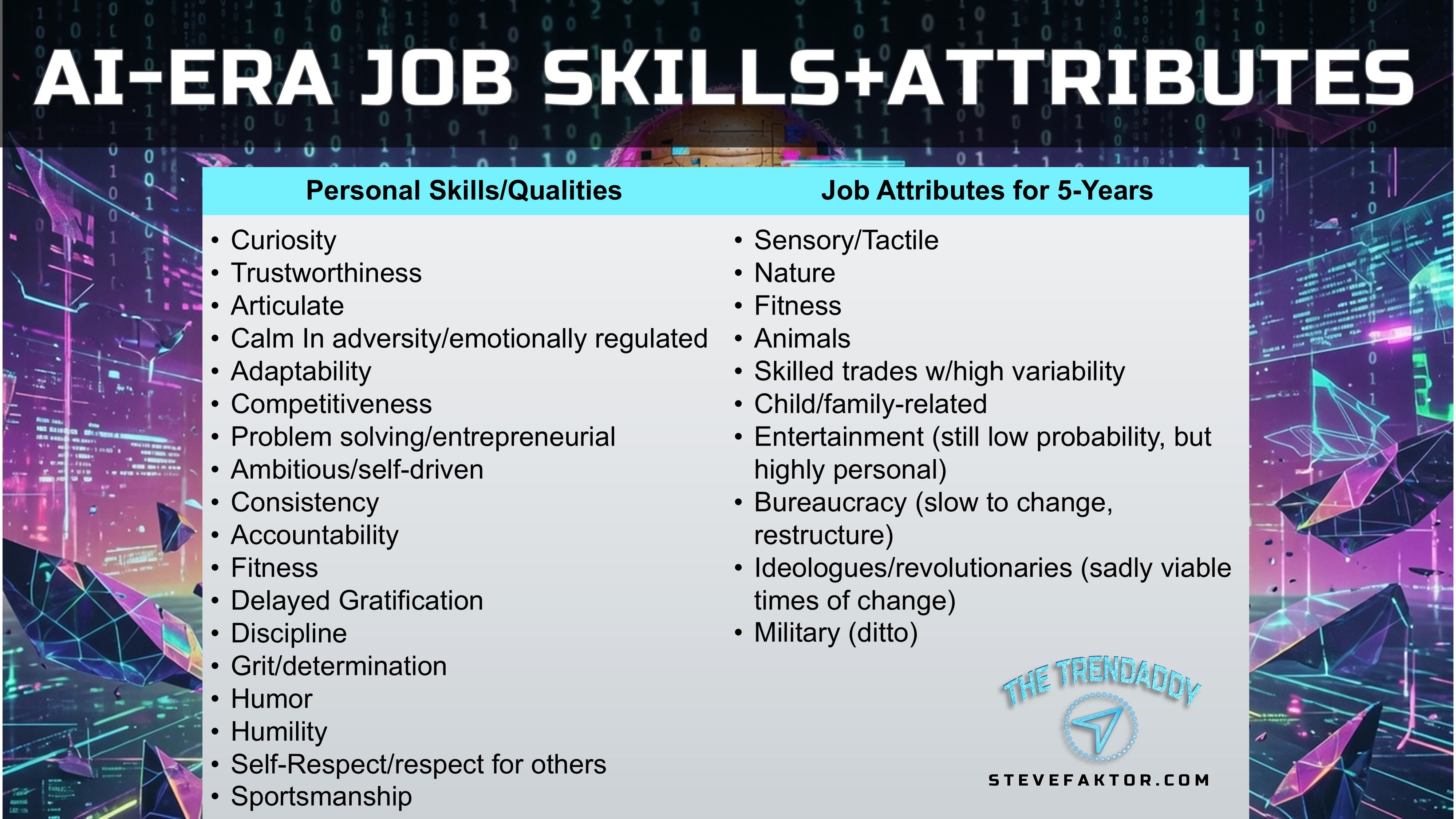
So what survives? It’s hard to name what new professions will emerge. It’s easier to identify skills and job characteristics where AI has low capacity or credibility and will allow us (and our kids) to thrive, including:
I’ll revisit many of these themes in future newsletters and episodes. Until then, subscribe free (or support my work & get exclusives), forward this to a friend, and cultivate your AI chakra.
If you want me to forecast your company’s future and growth opportunities, advise your startup, or speak at a future event, email here.


