

Episode Contents (full newsletter below):
00:00 - Why Bring Manufacturing Back?
00:23 - Manufacturing, Crypto & Friction
00:54 - The Last Hurrah for the US Dollar
01:47 - Stop the Bleed
02:12 - Target: China
02:18 - Global Expertise
02:47 - Two Types of Partnerships
03:06 - Reimagining Global Alliances
03:19 - Negotiating from Strength
04:02 - America’s Secret Weapon: Brands
06:48 - Private Investment
06:58 - Make Manufacturing Cool Again
07:16 - AI & The Future of Work
07:38 - Easing Disruption
07:51 - R&D: America’s Secret Sauce
Full newsletter:
In business, all things move to remove friction — cost, complexity, labor. So reviving manufacturing, a people, capital, and energy-intensive industry in a digital service economy, seems regressive and unsustainable. Reminds me of crypto, which was supposed to replace dollars as currency. It failed, because it was more complicated, slower, and less convenient. Unlike credit cards, it offered no extra buying power, purchase protection, customer service, or rewards. Why switch from Amex or PayPal? So if you’re going to re-introduce friction, the benefits better be spectacular, or it will fail.
In a way, offshoring manufacturing to China did add friction. Suppliers were now half a world away. Collaborating with them was infinitely more complicated and laggy. BUT the cost savings were so dramatic that corporations scurried to move production abroad, despite the extra friction.
So reshoring manufacturing might re-capture some of the advantages of local manufacturing. Especially now that China’s old labor cost advantage is neutered with automation. It can boost GDP, if not employment. What’s more important is the US needs to swap devaluing dollars into real, productive assets. That’s exactly what China’s been doing, liquidating dollar reserves to buy US farmland, mineral mines, capital equipment, and domestic infrastructure. It’s also been building infrastructure across Africa (Belt and Road) in exchange for access to their resources. Our window to do the same is closing. Trump’s trade war is speeding up devaluation and rewiring global trade around the US, without much to show for it.
I say all this to assert that whatever we do now must be strategic, not chaotic. Before touching tariffs, I’d do everything possible to prepare for manufacturing to succeed. Specifically…
Another Way
1. Stop the bleed
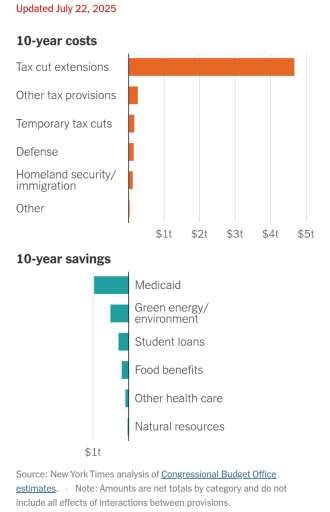
The low hanging fruit is pulling every unspent penny from The IRA and other stimulus programs. Anything that’s not targeted towards growth and hasn’t shown results by now. I would have halted all tax cuts and let Trump’s 2017 tax cuts lapse. That did not happen in the Big Beautiful Budget that just passed. These are mostly gifts to the rich. I’d keep the child tax credit, opportunity zones, and business asset deductions, which are a small part of the total. What’s most revealing is cuts for the rich are permanent and those for the poor/middle class expire in 2028.
2. Laser focus on China
First, that means, supply chain diversification. No matter what you hear from conspiracists screaming about “globalists”, globalization is inescapable. No single country can make everything their citizens expect — or will want in the future. Certainly, not without inputs from other countries. Foreign dependencies—or natural resource distributions—don’t just magically go away. Here’s famed economist Milton Friedman’s classic pencil example:
Instead of trying to do everything ourselves, we should to accelerate and subsidize, shifting supply chains from China to allied countries. It’s something we’ve already started doing.
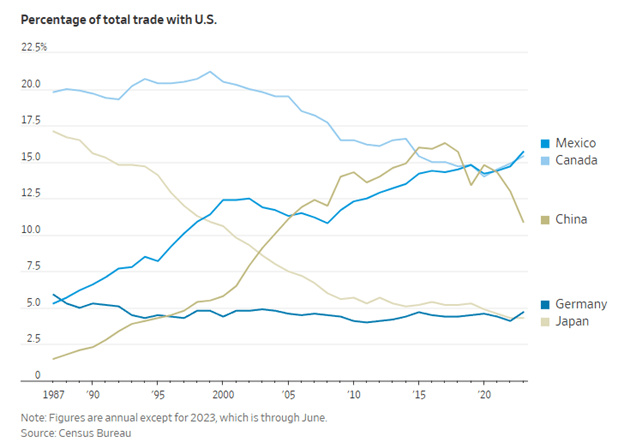
This reduces reliance on China, while retaining sourcing flexibility, competitiveness of global markets, and expertise of top producers. It gets us up and running much faster than trying to build everything from scratch ourselves.
But you can’t do that if we alienate them—threaten annexation, start trade wars, and undermine them mid-war.
In 2019 I wrote: “How are Korean & Japanese electronics companies failing to capitalize on the massive, growing, global distrust of China?? Wake up!” It’s six years later. Their door to pick up the slack in high tech manufacturing is closing. The new trade deal with Japan is promising, with its 15% base tariff. But it’s too soon to know if any new business will materialize. Many of these announcements sound like smoke blown up Trump’s *ss to inflate his ego at a press conference. It’s not real.
3. Secure Allies
Allies, in this case, fall into two categories—regional sourcing partnerships and large consumers markets (that import from China).
Let’s start with sourcing partnerships. The Trans-Pacific Trade Partnership (TPP), introduced under Obama, would have been a great start. It was a way to create a sphere of influence across Asia, countering the growing fear of Chinese power. Instead, we had a dumb, partisan backlash, killing the deal. Most simple Chinese products (clothes, toys, knickknacks) could just as easily come from Vietnam, Malaysia or Thailand.
There aren’t many big consumer markets. After the US, China, Eurozone, Japan, and India, things get quiet. Each warrants individual deals—ones that should present a unified front to China. They need to sit on our side of the table in those negotiations. In Trump’s approach, they are just another adversary, no different than China itself.
Rich Arab states have small populations. Africa, Latin/South America, and most of Asia have huge, but poor populations. Their consumption can add up in some categories, like agriculture and aviation. But our goal with emerging countries should be to help them emerge. We need to take away their incentive to join the BRICs alliance.
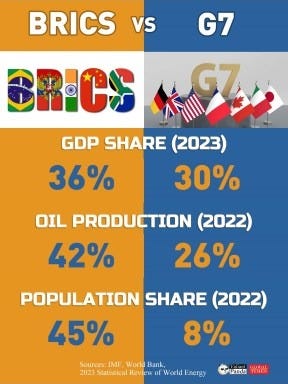
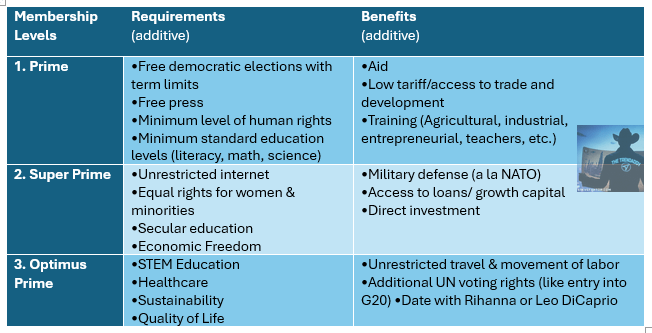
A good way to do this is with an incentive-based system. Not unlike the Mar-A-Lago Accords, instead of focusing on debt or dollars, focus our incentives on trade. In 2016, I wrote How to Make The U.N. Great Again…For the First Time. There, I proposed a more substantive alternative to the UN that transforms NATO into a trade entity. Almost any country could join, as long as it fulfilled multiple requirements. Benefits would escalate, as alignment with our interests increased. This is a positive, transparent, incentive-driven system to achieve what we flaccid, clandestine organs of soft power, like USAID, couldn’t.
Here is a sample tier system from that post. (The actual requirements and benefits can be anything we want.)
4. Renegotiate trade deals
With clear objectives and allies lined up, we can effectively use tariffs to pressure China. Let our companies compete there, stop product dumping, unfair subsidies, IP theft, and so on.
We also need to unleash our secret weapon: BRANDS. The leverage brands give us is criminally underrated.
Sidebar: Why BRANDS Are Our Secret Weapon...For Now

From the NBA to Nike to iPhones, what the US and Europe manufacture in spades, is Kate Spades. We manufacture DEMAND.

Kantar BrandZ ranks Apple as the world’s most valuable brand at ~$1.3 trillion, followed by Google and Microsoft. Only two Chinese brands recently cracked the Top 100 ($24B for Shein and $22B for Nongfu Spring). They’re hardly high end. Interbrand’s 2024 ranking has dozens of American and European brands in the $50–$500 billion range. Xiaomi and Huawei just cracked $6–8 billion on that list.

Western firms have mastered perceived value at scale. U.S. companies now carry ~90% of their value in intangibles like R&D and brand. They are global standards for identity, status and desirability.

Have you browsed Amazon lately? Half the listings read like Scrabble tiles after a hurricane. Dozens of knockoff chargers and mystery cables are the opposite of branded goods. They’re sold on price, not prestige. This is China’s default setting. This generic junk is the result of intra-regional competition within China. They’d flounder in low-cost commodity hell…if not for us.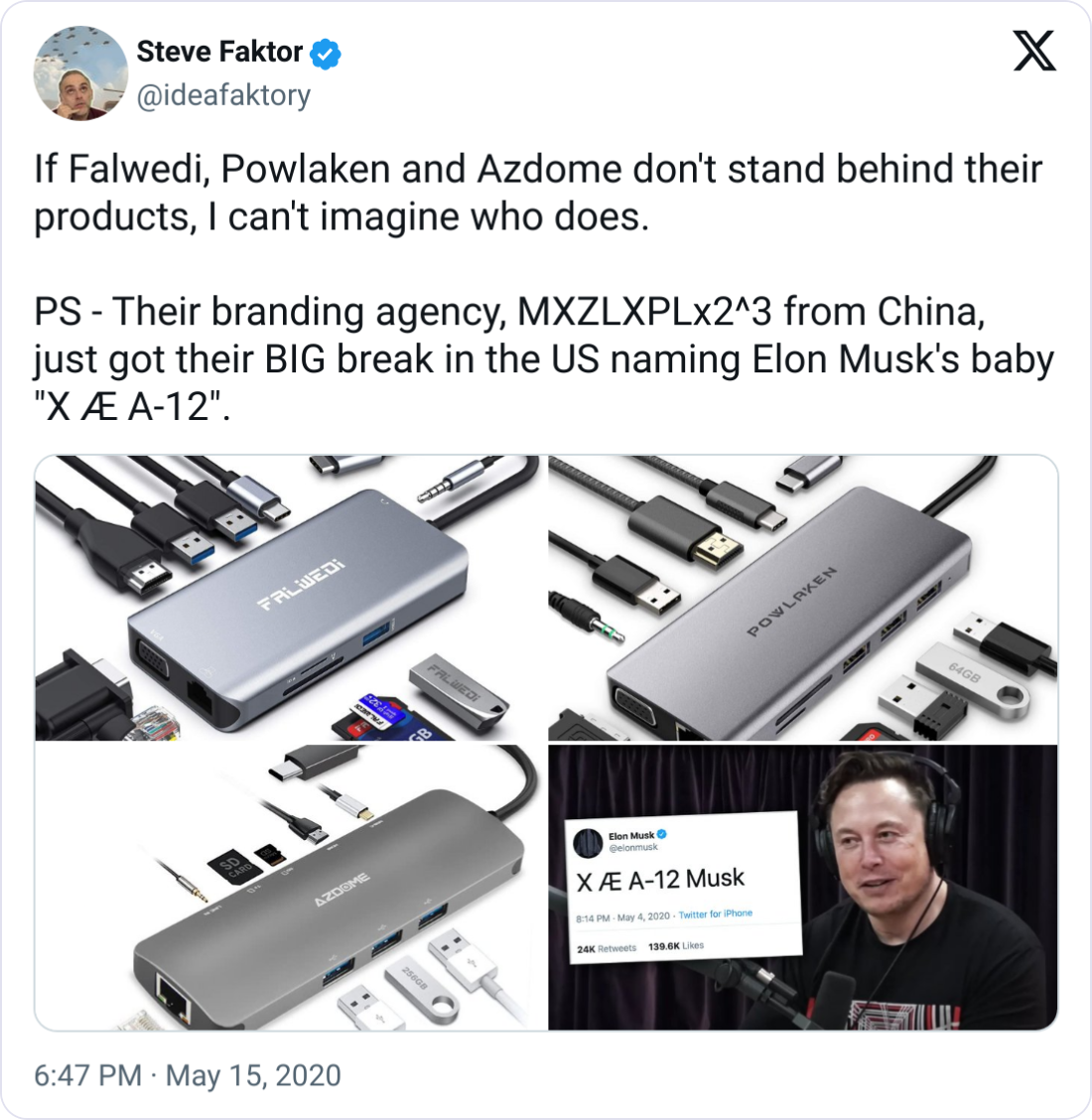
Manufacturing our premium products is a lifeline that props up China’s AGGREGATE national margin. For example, Foxconn has low single-digit margins to Apple’s ~40%. But 60% of its revenue comes from making Apple products. So, in effect, China’s factories get a “vig” on our designs that’s HIDDEN in low unit margins. It’s the same way Spotify saved the music industry—by restoring aggregate industry profit. Even though unit profits (per artist and per song/album) fell or vanished. China is the music industry, US brands are Spotify, Chinese manufacturers and employees are the artists. The artist always suffers.

Our leverage won’t last forever. China is investing in innovation and consumer brands. While it still hasn’t birthed a Louis Vuitton—or a romantic Dim Sum restaurant, the margin gap is narrowing. Chinese consumers already buy a huge share of luxury goods. They’re on pace to be 35–40% of the world’s luxury market by 2030. The value of brands like Li-Ning have rocketed 66% in a single year, riding a wave of patriotism. Apple slid to third place in China’s phone rankings. Other U.S. firms now warn of “record-low profits” in the region.

For now, brand gives the West outsized negotiating strength. Soon, Western brands will become immaterial to both Chinese producers and consumers.
5. Prime the pump of domestic manufacturing
The US needs to play the long game. While procuring from more friendly nations, we must keep domesticating strategic industries. This means:
Encourage foreign manufacturers to build here, as we’re doing with shipbuilding from South Korea.
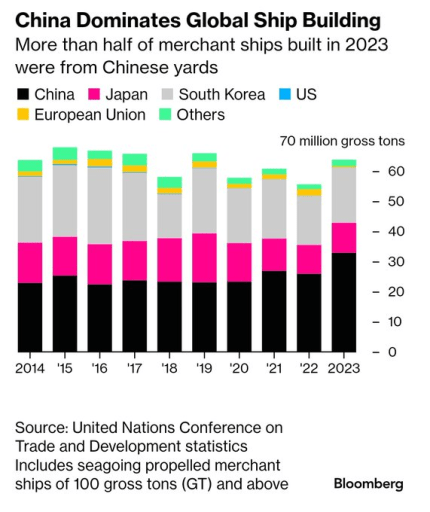
(Bloomberg) In any high-stakes military conflict with China, the US Navy will be critical to winning. But America’s shipbuilding industry is far from able to support what the Navy needs.
Enter South Korean shipbuilding powerhouse Hanwha Ocean Co. The company is buying a former Navy shipyard in Philadelphia and recently secured Korea’s first ever contract to overhaul a US naval vessel. These steps pave the way for the company to play a bigger role in the US naval shipbuilding sector and could herald the start of a new wave of investment.
America’s shipbuilding industry has virtually collapsed over the last generation, with years-long delays and cost overruns making it hard for the Navy to build the ships and submarines it needs.
“Look at the difference in shipbuilding between the United States and China — deeply concerning,” Deputy Secretary of State Kurt Campbell said a July testimony to a Senate committee.
Policy: For a while, Biden was more MAGA than MAGA. He kept Trump’s tariffs, added new ones, and incentivized domestic manufacturing with the CHIPS and Inflation Reduction Acts. Subtract the waste and social agenda, add performance incentives and monitoring, and it’s a better driver for manufacturing than Tariffpalooza.

Private Investment: tech giants, automakers, and pharma companies would need to make massive investments in new facilities.
Workforce Development: Not only is there a huge skills gap, but Americans aren’t exactly fired up for factory work. We’d not only need training programs and automation, but Lizzo and Kardashians posting FOMO bait from assembly lines.
6. Facilitate the future
With AI waiting in the wings to power the future economy, we will see entirely new industries and professions flourish. The key is letting them— occasionally facilitating their success with policy, investment, regulation. At the same time, we need programs to ease life disruptions by transitioning people into emerging job categories. We should also give every American a financial stake in the success of this new economy. (I’ll cover that in a future installment.)
R&D investment: I’ve sifted through clients’ IP portfolios to find buried treasures to commercialize. We should do the same across DARPA, NSF, NIH, and every other government-funded program. Then companies can reward us for that investment. And let’s invest in new long-term research. Building a pipeline of foundational technologies is something the US has been good at. I broke this down in this episode.

What’s Next?
I’ll pause the series here, for now. Suffice it to say, this road we’re on has many forks. The good news, rich people will be just fine. The working class and poor will need a plan—and some luck. You can reach out for speaking, scenario planning, or innovation inquiries. I’ll also gauge interest in live Q&A’s on how to plan for this uncertain future (career choices, education, investments, etc). Meanwhile, sign up for The Trendaddy newsletter and videos on all social platforms for updates. Be sure to set notifications on so you actually see my updates.
If you found this helpful, share it with others.


